The 70%
everyone throws away.
Cacao pod husks turned into biodegradable leather, cut into prefabrication kits, and assembled by women in the village — a second income from a crop they have already harvested.
Fermentation uses only the white pulp inside the pod, about 30% of the fruit. The remaining 70% — the husk — is discarded: left to rot, burned, or stockpiled as farm waste.
de'Finnitive Pods exists to change that. We help cacao farmers across Thailand diversify what they sell and increase what they earn — from a harvest they have already brought in.
A Thai cooperative developed a method for turning cacao husks into a biodegradable leather. We buy the husks, the cooperative makes the material, and we cut it into prefabrication kits that village women assemble into finished products.
of every cacao pod is husk. Until now, all of it was wasted.
We link cacao farmers and fermentors across Thailand directly to the leather cooperative, which buys the husks.
The husks are bought from the farm, so the harvest earns twice: once for the beans, once for the material that used to be waste.
Our partner converts the husks into cacao leather and returns the finished material to us.
We design each product and pre-cut the leather, punch the holes, and bag it with the hardware. Everything needed for one finished piece, ready to assemble.
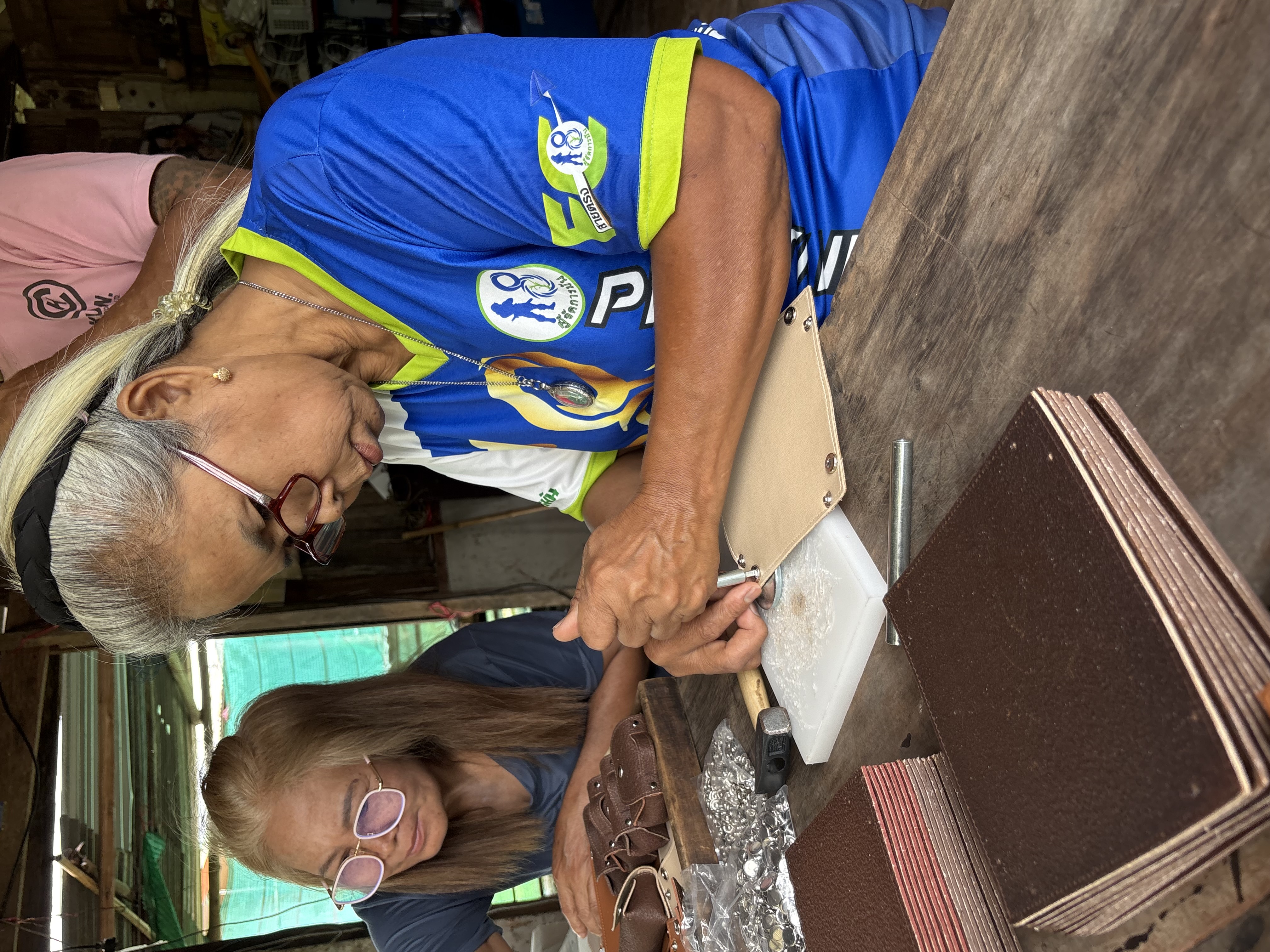
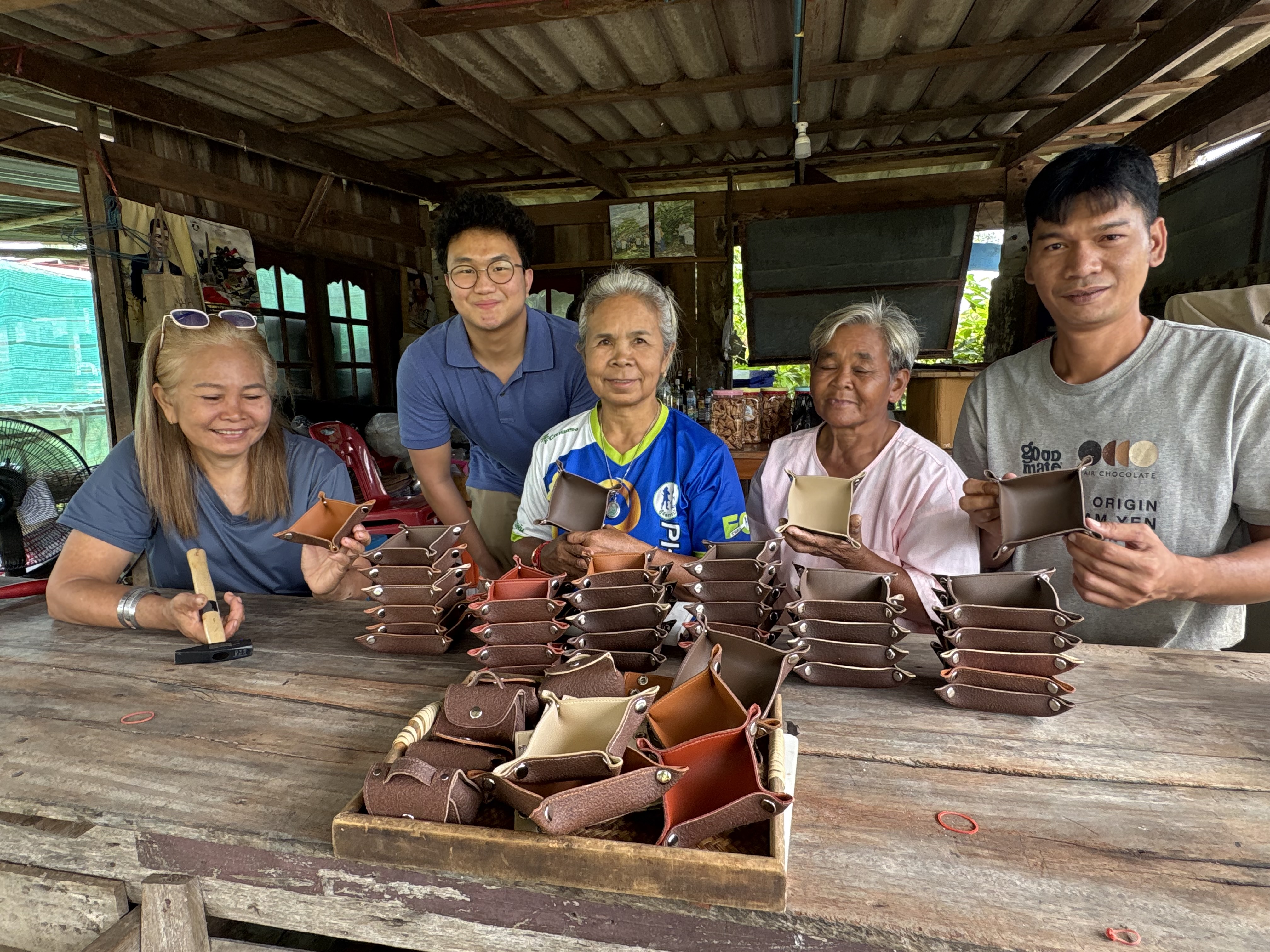
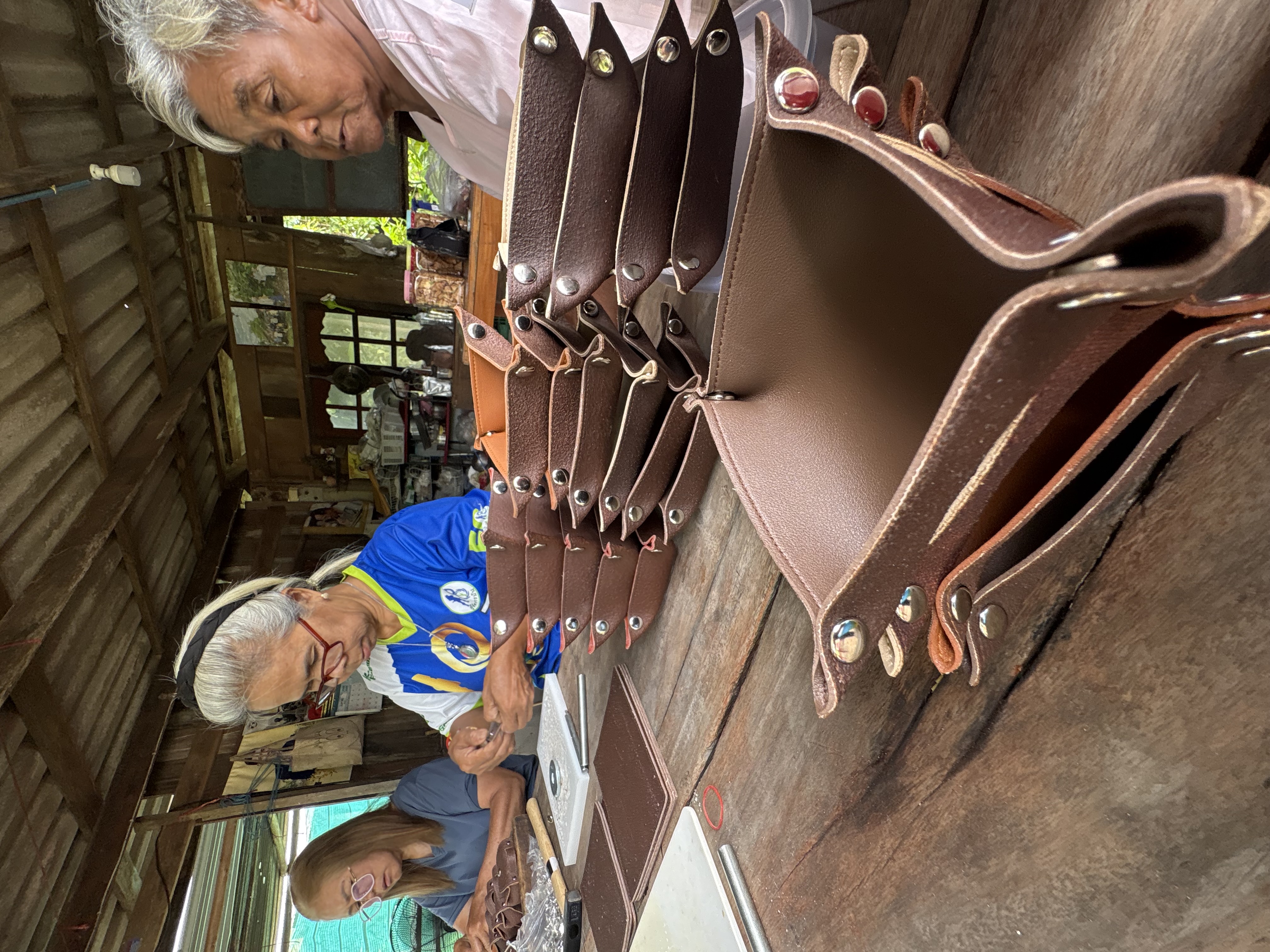
The kits go out to women in the village, who assemble them at home or at the table with a hammer and a rivet setter. No leatherworking skill, no machinery, no training course. We buy back every finished piece.
No animal product at any stage. Every piece is made in the community the material comes from.
The cacao pod husk is one of the most underused agricultural byproducts in the world. Most of it rots on the ground or gets burned. Our partner cooperative in rural Thailand developed a proprietary process to turn it into a leather-like material that is strong, flexible, and fully biodegradable.
It is not a synthetic imitation — it is a natural material made from an existing agricultural byproduct.
Leatherworking is a skilled trade. Most people in a cacao village have never done it, and nobody is going to spend a year learning before they earn anything. That is the barrier we design around.
We do the skilled part ourselves: the pattern, the cutting, the hole punching, the hardware. What goes out to the village is a prefabrication kit — every piece for one product, bagged and ready. Assembly takes a hammer, a rivet setter and a few minutes.
It means the women in the village can earn from this in an afternoon, at their own table, without buying a machine or taking a course. We buy back every finished piece.
Prefabrication kits being assembled in the village
Every photograph from the cacao farms and fermentation sites, the chocolate making process, and the leather workshop. All in the Gallery.
View Full Gallery →
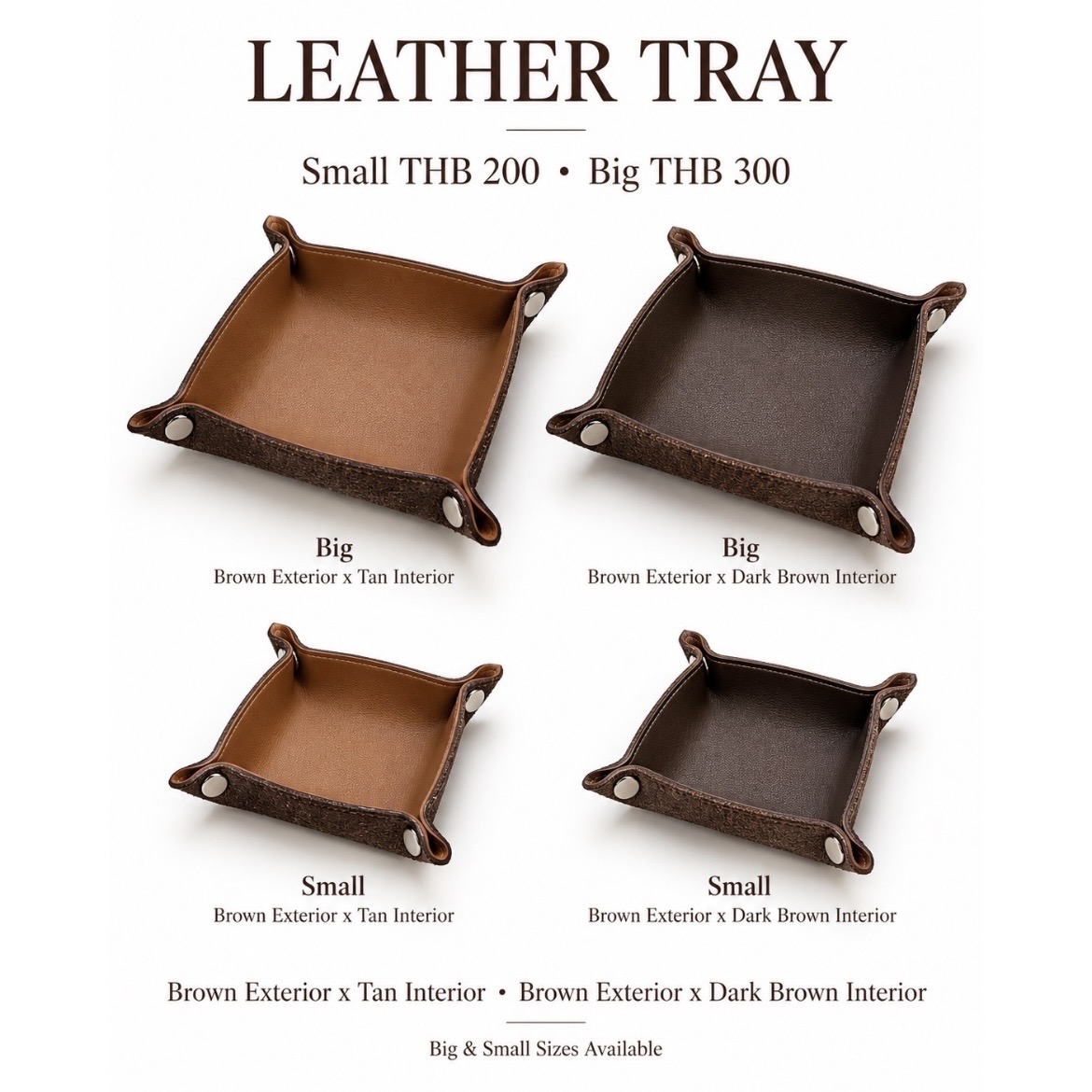
Every piece is cut by us into a kit and assembled by hand in the village. Vegan, made by the local cooperative, and no two pieces identical.
Five hand-drawn animal designs.
Four colourways, assembled from a pre-cut kit. ฿250.
Folded and riveted from a single pre-cut piece.
Handstitched, sized for everyday use.
Single pieces are on Shopee. More designs are in development.
Our pieces are already stocked alongside the chocolate in cafes and shops around Thailand. For businesses looking to stock them, or to have pieces made in cacao leather to their own spec — volume and custom orders available through the cooperative.
naravidfinn@gmail.com